Impact evaluation
Engaging the informal private water sector to respond to water supply needs in urban areas
Lessons learned and recommendations from operational research on market‐based water, sanitation and hygiene in Nigeria


- Published by
- Catholic Relief Services (CRS)
- Project implementer
- Catholic Relief Services (CRS)
- Donor
- USAID
- Programme
- Operational research on market-based water, sanitation, and hygiene in Nigeria
- Results level
- Systemic change
- Method
- Mixed method
- Data source
- Mixed
- Intervention types
- Improved access to information
- Improved input supply
- Improved marketing of products
- Improved product / service quality
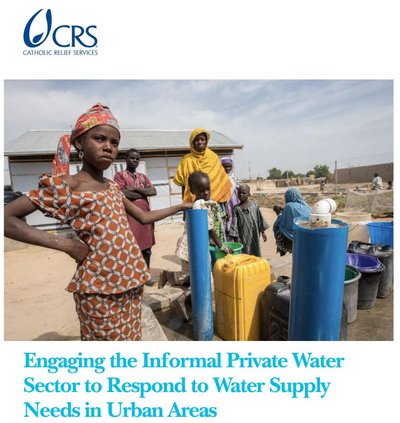
This study was conducted in Maiduguri, the capital of Borno State, Nigeria. It aimed to address the unsustainable dependence of water committees (WATCOMs) on NGOs for water supply by exploring the potential of the informal private water sector (IPWS) as a sustainable solution.
The operational research began in 2019 and included a comprehensive assessment of the water market system in Maiduguri and pilot interventions from January 2020 to March 2022 to improve access to quality water through private borehole owners and pushcart water sellers.
Intervention description
The project focused on engaging the informal private water sector to address urban water supply needs in multiple Ethiopian cities.
Specific activities included developing partnerships with local private water suppliers and supporting the establishment of sustainable business models that provided reliable and affordable water supply to underserved urban areas. The project collaborated with private water vendors, local government authorities and community organisations to pilot and refine these models.
Evidence shows that the project partners adopted the promoted business models, with private water suppliers demonstrating ownership by investing in infrastructure improvements and scaling up their operations. The response from the partners was positive, with many expressing their intention to continue with the models beyond the project's support.
Evidence methodology
The methodology involved a mixed-method approach combining quantitative and qualitative data collection. Data was collected from a sample of private borehole owners, community-managed borehole owners and pushcart sellers using tools pre-programmed into the CommCare data collection application.
The data collection spanned from July 2021 to March 2022, with quantitative data collected every two months and complemented by qualitative data through key informant interviews and focus group discussions. The study also involved a cost-benefit analysis of community-managed versus private boreholes.