Reducing energy consumption and introducing climate-resilient feeding practices in the Nepal dairy sector
Since 2019, the UK FCDO's CASA Programme has partnered with agribusinesses and investors, helping agribusinesses make their business models more inclusive, attract investments, and improve the income and climate resilience of smallholder farmers. CASA demonstrates that investing in climate-resilient agri-food systems with smallholder farmers can be profitable.
CASA’s work in the dairy sector is contributing to both carbon mitigation and climate resilience goals:
Carbon mitigation
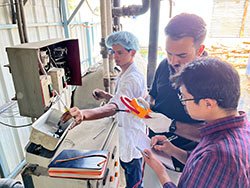
- CASA supported SK Dairy in Nepal to conduct an energy audit at its factory in Nepalgunj. The adoption of energy saving measures by the dairy led to a 31 per cent decrease in electrical energy consumption, a 24 per cent reduction in the monthly electricity bill, and a 37 per cent decrease in greenhouse gas emmisions emissions. Efficiency measures included the implementation of energy-efficient dairy processing and packaging machinery to minimise costs and reduced carbon footprint; decentralised processing to reduce transport miles; and promotion of fuel-efficient transportation methods.
- CASA supported smallholder suppliers of Goras Green Feed and Resources in adopting forage-based dairy production as an alternative feed source, reducing methane emissions and improving soil health and biodiversity.
- Casa prioritises reducing food loss in its work with dairy partners, lowering resource consumption (land, water) per unit of product on the market.
Climate resilience
Across all dairy partnerships, and especially with the Central Dairy Cooperative Association, CASA provided technical assistance on good manufacturing practices to smallholder suppliers. This focused on the management of feeding grasses at the farm level to improve climate-resilience of dairy production.
All of the above activities were integrated into CASA’s broader market systems development goals. They contributed to improving the business models of partner agribusinesses within the dairy sector and the way in which they generate benefits for their smallholder suppliers.
Through these actions, CASA has demonstrated the efficacy and commercial viability of integrating climate objectives into MSD interventions. This highlights the importance of identifying opportunities to contribute to climate resilience, adaptation and, where possible, mitigation, at the intervention design phase.
In 2022, CASA became fully funded by UK International Climate Finance (ICF), resulting in climate action becoming a core programme goal. How CASA adjusted to focus on climate and what lessons it learned are shared in the paper Adapting agriculture programmes to address climate change.