- Published by
- Development Solutions
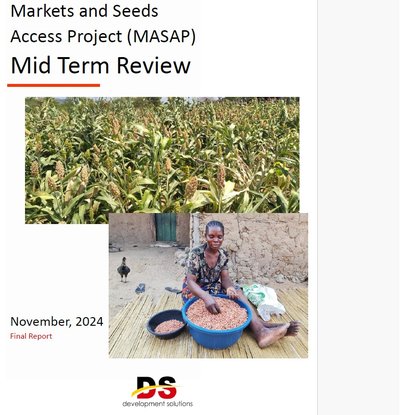
This review assesses the first phase of MASAP - a programme promoting drought-tolerant small grains and legumes - sorghum, millet, groundnuts and cowpeas - across four districts in Zimbabwe and Zambia, structured around the six OECD-DAC evaluation criteria.
Evidence comes from key informant interviews, focus group discussions and four stories of change, gathered against the backdrop of the severe 2023-24 El Niño drought that slashed yields and complicated quantitative measurement.
The review examines a hybrid market systems development and market development approach, noting faster progress in Zambia's more liberalised economy and a reliance on grants that risks creating dependency.
It looks closely at private sector engagement, early generation seed production, innovation grants, farmer managed seed systems and emerging policy reform on farmer variety registration.
Recommendations address drought contingency planning, bank-based financing, youth participation, nutrition and streamlined approval of partner business plans. Annexes provide the logframe, progress against targets and farmer case studies.