Case study
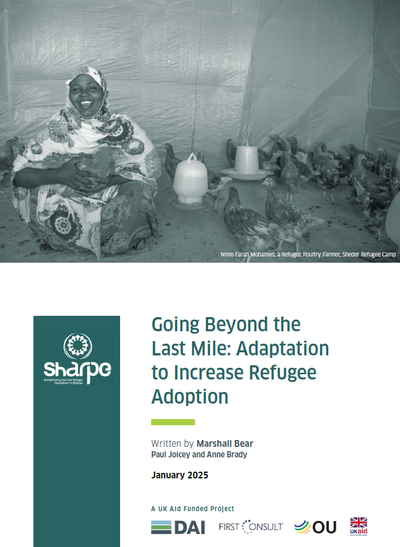
Going beyond the last mile: adaptation to increase refugee adoption


- Published by
- SHARPE
Using the Strengthening Host and Refugees Populations in Ethiopia (SHARPE) programme's engagement in the poultry sector as an example, this case study explores how MSD principles can be adapted to increase refugee participation in economic activities, particularly in fragile displacement settings.
It highlights the challenges refugees face, including legal barriers, limited assets and weak market systems, which hinder their ability to engage as entrepreneurs, employees or consumers.
The report demonstrates the importance of continuous adaptation - adjusting business models, financing mechanisms and partnerships to better fit refugee realities.
Key takeaways include the need for direct market facilitation, tailored financial solutions and stronger local partnerships rather than reliance on national firms. The findings suggest that MSD can drive refugee economic inclusion but requires flexible, hands-on facilitation and long-term commitment to overcome systemic challenges.
The study ultimately calls for more innovation and investment in sustainable, market-driven solutions to support refugee self-reliance.