- Published by
- TechnoServe Mozambique, Women in Business (WIN)
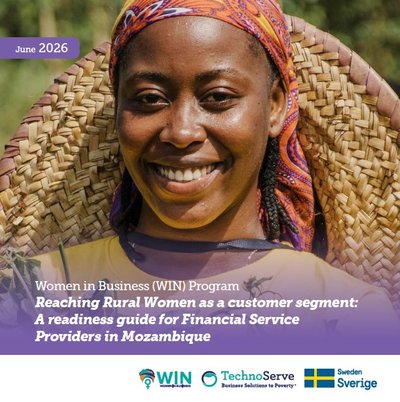
This guide draws on WIN 2.0's rural women's financial behaviours study and direct experience supporting market interventions in northern Mozambique.
It sets out why rural women represent an underserved but commercially viable customer segment, what they actually need from savings, credit and digital payment products, and what rural expansion requires operationally.
It draws four lessons from WIN's partner interventions: enter where commercial ecosystem conditions already exist, use an adapted risk model for agricultural lending built around aggregators rather than direct smallholder lending, allow a full agricultural cycle for multi-partner pilots to mature, and secure community and government legitimacy before launch rather than alongside it.
The guide is built around the seven-dimension Rural Readiness Self-Assessment Tool, also available as a standalone fillable checklist, which scores organisational readiness across six commercial and operational dimensions plus a seventh dedicated to whether products will genuinely reach women.