MSD programmes, by their nature, need to be entrepreneurial, adaptive and system-oriented. This can put them at odds with conventional procurement processes that expect intervention activities and anticipated results be identified up front.
Donors therefore need to consider at least three specific challenges when commissioning a programme to use the MSD approach:
1. Flexible team staffing
In order to work effectively with local partners to co-create change, MSD programme teams need competency in relationship-building, communication and business acumen. Such soft skills often need to be cultivated through on-the-job learning.
As programme strategies evolve and shift between systems, fresh expertise and thinking may need to be brought in.
If key personnel are defined too rigidly within the solicitation, it makes it difficult to bring in new staff or adjust roles as programmes evolve. Building flexibility into this aspect of the solicitation process is therefore crucial.
The BEAM briefing Four procurement principles to guide procurement practice for MSD covers staffing considerations for MSD programmes. See Principle #1 in particular.
The MSD competency framework also provides a useful overview of the mix of skills needed across MSD programmes.
2. Balance autonomy with accountability for delivery
Perhaps the central consideration for funders commissioning an MSD programme is how to balance accountability for delivery with giving implementers sufficient autonomy to adapt in response to changing market realities. This tension becomes more complex when programmes are delivered through consortia, where different partners bring distinct skills and areas of expertise. The table below sets out a range of commissioning options, which differ in the degree of autonomy given to implementers to shape programme design. Choosing between these options requires careful judgement and will depend on the characteristics of the market system, how clearly the problem can be defined at the outset, confidence in an implementer’s thematic or geographic expertise, and the operating constraints of the funding organisation.
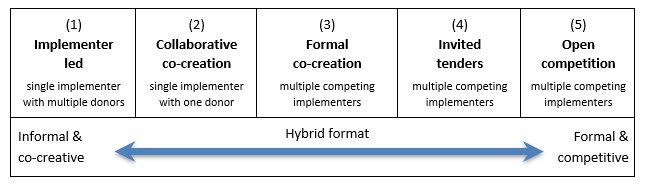
For more on balancing these considerations, see: How To! Do MSD procurement #1.
3. Design for outcomes, not activities
It is difficult to define results at the outset, and progress rarely follows a neat timeline, with scaling and change emerging only in the latter half of a project. See the image below, taken from Evaluating systems and systemic change, for a simple overview of this.
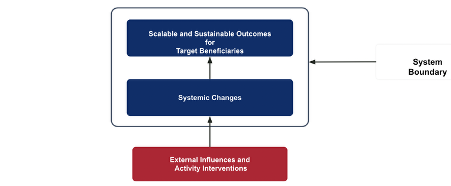
This requires building a measurement system from the start that holds the implementing team accountable for outcomes while allowing activities to change and evolve as the programme proceeds throughout implementation. If the MEL system is defined rigidly at the solicitation stage, implementation will proceed within narrowly defined bounds that are out of step with market realities.
Find more on this in Four procurement principles to guide procurement practice for MSD. See Principle 4 in particular.
The MSD procurement learning series provides further guidance on what funders should consider when commissioning a programme, as well as the procurement issues that arise throughout a programme’s life. Procurement paper #2 in particular provides insights for donors into how to design tenders as well as evaluate bids, as well as advice for implementers on responding to MSD-focused bids and requests for proposals.