Internal review
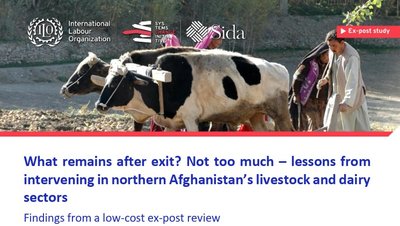
What remains after exit? Not too much – lessons from intervening in northern Afghanistan’s livestock and dairy sectors
Findings from a low-cost ex-post review


- Published by
- ILO Systems Change Initiative
This short brief presents findings from a low-cost ex-post review of market systems interventions in northern Afghanistan, focusing on livestock and dairy.
It responds to a persistent gap in evidence by testing whether impacts claimed by MSD programmes endure beyond programme exit. The study revisits two ILO sister programmes implemented between 2015 and 2022 - Road to Jobs (R2J) and its successor Road to Decent Jobs for All Afghans (R2DJ4ALL) - and contrasts outcomes across sectors.
While the evaluation of the intervention in the carpet sector reveals clear indication of sustained system-level outputs and outcomes, a rapid review of the legacies of the livestock and dairy interventions finds little of substance remains intact for further assessment.
This short brief examines why earlier successes did not endure, what lessons can be drawn from key decisions made at the time, and considers whether different actions may have been pursued during the programmes’ lifetimes.
The findings point to political instability, climate shocks, market distortions and weak sustainability planning as key factors undermining lasting change. The brief reflects critically on incentive design, missing market functions and resilience, offering lessons for more robust market systems programming in fragile contexts
Context for this ILO study
Programmes using the market systems approach claim that their most successful interventions create impact for target groups that extends beyond the life of the programme. Yet, such claims are rarely validated. Very few ex-post studies have been commissioned, and this gap represents an oversight.